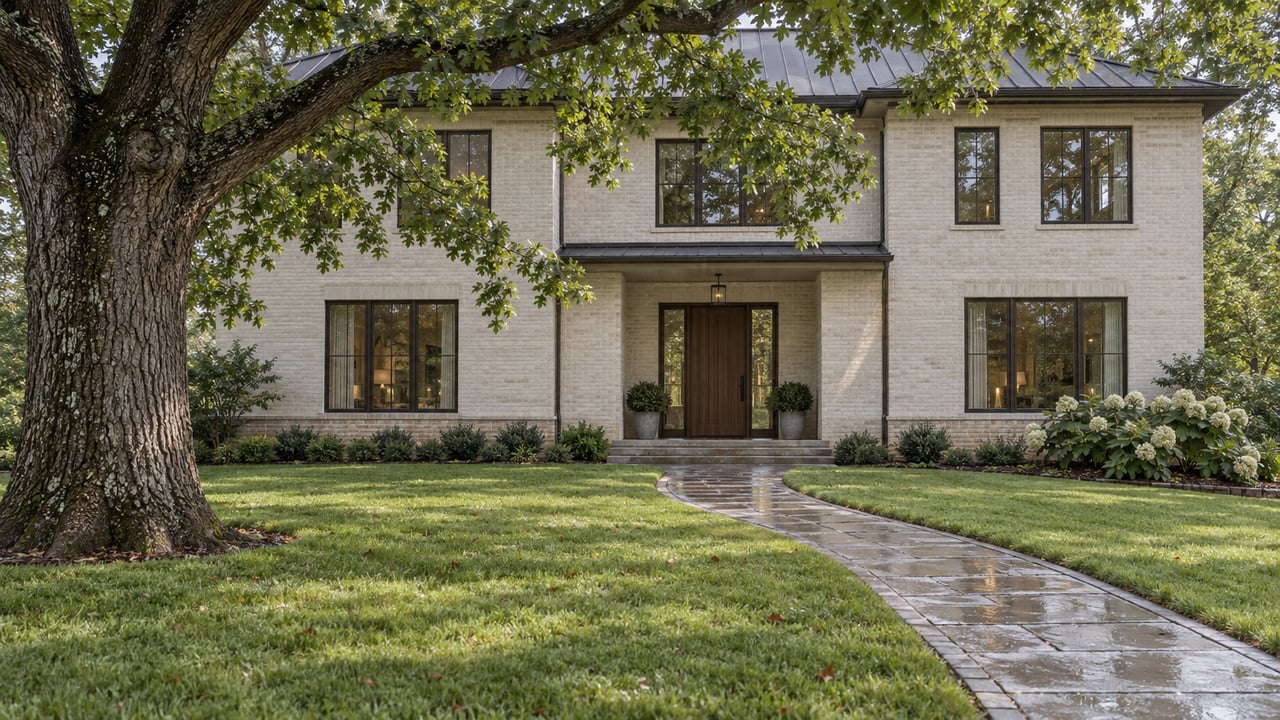
What Buckhead's New Tree Ordinance Really Costs a Teardown Buyer, and Who Has to Sign Off First
October 1, 2026
October 1, 2026
Say you're under contract on an older home in Buckhead, the kind of lot with a hundred-year canopy that made the listing photos look like a park. You've already priced in the tear-down. You've already called a tree service and gotten a number for recompense, the fee Atlanta charges when a healthy tree comes down for construction. You think you've done your homework.
Then your architect submits the site plan and the City Arborist's office comes back asking why the driveway couldn't reuse the existing footprint instead of shifting six feet toward the property line. Around the same time, you learn the neighborhood has its own tree review board, and nothing goes to the city until that board signs off first. The fee you budgeted for was never the hard part. The discretion was.
That's the part of Atlanta's rewritten Tree Protection Ordinance that doesn't fit neatly into a line item, and it's the part that matters most if you're buying, selling, or building on a wooded lot in Buckhead this year.
Atlanta's City Council unanimously passed the new ordinance in June 2025, and it took effect January 1, 2026, applying to any development plan submitted after that date. The headline number is the one every contractor and tree service in Buckhead will mention first: recompense, the per-inch fee charged for removing a regulated tree, jumped from $30 per diameter inch plus a $100 flat fee to a flat $140 per diameter inch.
Land Plus Associates walked through what that means in real terms: removing a 20-inch tree without planting a replacement now runs about $2,800 in recompense, up from roughly $700 under the old formula. On a heavily wooded Buckhead lot, where a single teardown project might involve half a dozen mature trees, that difference adds up fast, and it's the number most buyers price into their offer before they ever talk to an arborist.
The fee is predictable. The review isn't. The new ordinance gives the City Arborist's office authority to make judgment calls that weren't spelled out as clearly before, including whether a design "cannot reasonably be designed or positioned to further increase tree protection" and whether a site plan minimizes tree impact "to the maximum extent practicable." The city can also require a project to reuse existing developed areas, like a driveway or parking pad, rather than clear new ground.
None of that is measured in inches or dollars. It's a judgment call made project by project, and it means two nearly identical lots in Buckhead can get two different answers depending on how the arborist reads the plan. For a buyer who has already gone under contract assuming the recompense fee is the only variable, that's the moment the timeline slips.
Buckhead adds a layer the citywide ordinance doesn't mention at all. Several of its most established neighborhoods, including Tuxedo Park, Brookwood Hills, Paces, and Argonne Forest, maintain their own tree or architectural review boards. In practice, the city won't accept a permit application in these areas until the neighborhood board has already reviewed and approved the tree work. Skip that step, or find out about it after you've already submitted to the city, and you've added weeks to a process that was already running on the arborist's discretion.
This is the friction that catches out-of-area builders and first-time Buckhead buyers alike: the ordinance you read on the city's website is only half the approval chain if your lot sits inside one of these HOA-governed pockets.
"As most projects in the heavily wooded Buckhead area involve multiple tree removals, this new ordinance represents a substantial change in development costs that property owners need to factor into their budgets."
That's Charlie Sears of Land Plus Associates, describing the shift to Buckhead.com shortly before the ordinance took effect. The quote is usually cited for the dollar figures. The part worth sitting with is "property owners need to factor into their budgets," because the budget in question includes time, not just money.
Here's the kind of scenario that plays out under the new rule. A buyer closes on a home with a large oak in the backyard, planning to add a pool the following spring. When the permit process starts, the oak turns out to be classified as a heritage tree, and the pool's footprint falls inside its protected buffer zone. The project stops, not because the buyer did anything wrong, but because nobody checked the tree's designation before falling in love with the yard.
That kind of surprise is avoidable, but only if it gets checked before the offer, not after the closing. A tree survey costs far less than a redesigned pool plan, and it turns a guess into a fact you can negotiate around.
Two things are converging in Buckhead this year that make the ordinance more than a paperwork update. First, Hurricane Helene's damage to the metro's mature canopy in recent years has left more Buckhead properties with storm-stressed or structurally compromised trees, which pushes more removal decisions into the Dead, Diseased, or Hazardous track. That pathway is genuinely good news: the ordinance preserves it as narrower, faster, and less costly than removal tied to a redevelopment project, and it remains the safety valve for homeowners dealing with a tree that's actually a risk rather than an obstacle to a design.
Second, the city has committed to using the higher recompense revenue to expand arborist and field staff, specifically to address the review delays that have frustrated Buckhead homeowners for years. That's a genuine improvement on the horizon, but it hasn't happened yet, which means anyone permitting a project in 2026 is still working through a system that's better funded on paper than it is on the ground today.
If you're marketing an older, heavily wooded lot in Buckhead as a teardown opportunity, going through design and permitting before you list is worth serious consideration. A permitted "placeholder" plan proves the lot's real building potential to a buyer who might otherwise walk away worried about arborist discretion they can't predict. It shifts the risk of an unpredictable review from the buyer's due diligence period to the seller's pre-listing preparation, which is a much better place for it to sit.
If you're the one buying, the due diligence list gets a little longer than it used to be. Order a tree survey before you get attached to a lot. Ask directly whether the neighborhood has its own tree or architectural review board, since that single question determines whether your timeline includes an extra approval layer before the city ever sees your paperwork. And if a home has had trees removed in the past, ask whether that removal was permitted. Unpermitted work can surface as a disclosure issue during a sale, and it's a much easier conversation to have before an offer than during an inspection period.
Does the new ordinance only apply to full teardowns? No. It applies to any development plan submitted after January 1, 2026, which includes additions, pool installations, and major renovations, not only complete rebuilds.
What if the tree in question is already dead or dying? Trees classified as Dead, Dying, or Hazardous follow a separate, faster permit pathway that the ordinance specifically preserves, and it typically costs less than removal tied to a construction project.
Will a standard home inspection catch a tree recompense issue? Not usually. Recompense and tree permitting are land use and development costs, not structural defects, so they fall outside a typical inspection and need to be checked separately if you're planning any construction.
If a previous owner removed trees without a permit, does that follow the property? It can. Unpermitted removal is the kind of history that a buyer's attorney or inspector may ask about during a sale, and it's worth confirming before you're deep into a transaction.
If you're weighing a wooded lot in Buckhead, whether you're buying it, building on it, or getting ready to list it, it's worth walking the property with someone who knows which of these questions to ask before you're under contract. Yahtava Morrison works Buckhead regularly and can help you figure out what a specific lot's canopy actually means for your plans, and what a free valuation looks like if you're on the selling side of this decision.
Stay up to date on the latest real estate trends.


With deep local knowledge and a passion for helping clients succeed, Yahtava Morrison provides reliable real estate guidance.