The Pipe You Never See: What Atlanta's Sewer Rules Actually Mean for Intown Buyers
August 13, 2026
August 13, 2026
Who owns the pipe between your future kitchen and the street? Most buyers assume the answer is split down the middle: yours to the curb, the city's from there. In Atlanta, that assumption is wrong, and finding out the hard way tends to happen after closing, not before.
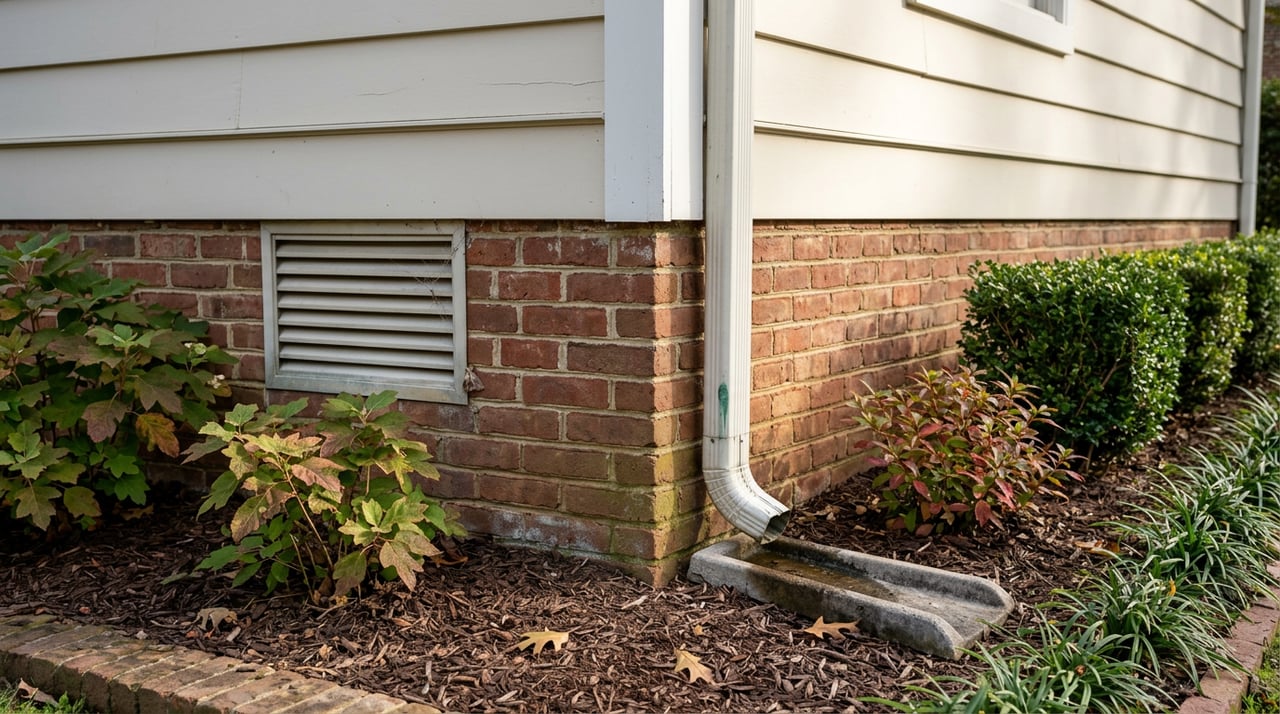
The City of Atlanta draws the line differently than most buyers expect. According to Atlanta 311's own knowledge base, the maintenance and repair of the entire sewer service lateral, from the house all the way to the connection at the municipal main, is the property owner's responsibility. Not to the sidewalk. Not to the property line. To the main itself. That boundary is set under the Atlanta Code of Ordinances and administered by the Department of Watershed Management, and it applies whether the pipe under your new front yard was installed last year or well over a century ago.
That single fact changes what due diligence should actually look like for anyone buying in Atlanta's older intown neighborhoods, and it's the piece most inspection checklists gloss over.
Georgia is a caveat emptor state. Sellers aren't required to fill out a formal disclosure statement, and the responsibility to uncover problems falls mostly on the buyer's own inspection and investigation, a legal doctrine Nolo's real estate guidance describes plainly as buyer beware. Sellers still can't lie if asked directly, and Georgia Code 44-1-16 requires a truthful answer to any question a buyer actually poses, a point Homecoin's summary of the statute lays out clearly. But if you never ask about the sewer line, and the seller never volunteers it, there's no paperwork trail forcing the issue into the open.
That leaves the inspection period as the only real safety net, and in competitive Atlanta neighborhoods, that window is short. Due diligence periods in popular pockets like Old Fourth Ward, Candler Park, and West Midtown typically run 7 to 10 days, according to Noble Property Inspections. A standard home inspection there runs $350 to $650 depending on size and age of the property. That fee buys a look at the roof, the panel, the crawl space, and the visible plumbing. It does not automatically include a camera run through the sewer lateral, which means the one system with the highest hidden-cost risk is often the one nobody looked at unless someone specifically asked for it.
Atlanta's intown housing stock spans more than a century of construction, and the sewer material under any given lot tracks pretty closely with when that block was developed. Roto-Rooter's local breakdown maps it out by neighborhood:
| Neighborhood | Typical era | Common material | Why it matters now |
|---|---|---|---|
| Grant Park, Inman Park | Late 1800s | Clay tile | Some of the oldest residential laterals in the city, with a century-plus of joint movement |
| Virginia-Highland, Morningside-Lenox Park | 1920s to 1940s | Cast iron | Reaching the end of its expected service life as joints deteriorate |
| East Atlanta, Kirkwood | 1950s to 1960s | Clay tile or early PVC | Now 60-plus years old, with joint separation and root penetration showing up |
Layered on top of all three eras is Orangeburg pipe, a compressed wood fiber material sealed with tar that was common between the 1940s and early 1970s. It carries roughly a 50-year lifespan, which means, as Fix & Flow's plumbing team put it, every Orangeburg line still in the ground in Atlanta is already past its expiration date.
Depth adds another variable buyers rarely think about. Fix & Flow notes that a lateral in a flat neighborhood like East Lake might sit four feet deep, while a line in hilly Ansley Park or Morningside can run eight to twelve feet down. Deeper lines cost more to access and repair, whether the method is open-cut excavation or a trenchless approach that avoids tearing up a driveway or mature landscaping.
None of this means every home in these neighborhoods has a failing line. It means the base rate of risk is not evenly distributed across metro Atlanta, and a buyer comparing a 1925 bungalow in Virginia-Highland to a 2015 build in the northern suburbs is not comparing equivalent plumbing risk, even if both homes pass a standard visual inspection with flying colors.
A camera scope of the sewer lateral is a modest add-on next to the base inspection fee. Compare that to what a surprise repair can run once you own the problem. Noble Property Inspections notes that replacing an HVAC system in Atlanta's climate can run $8,000 to $12,000, and foundation repair tied to the area's red clay soil can exceed $15,000. Sewer lateral replacement isn't cheap either, and the final number depends on the same factors Fix & Flow lays out: length of run, depth, whether the path crosses a driveway or mature trees, and whether the contractor uses open-cut or trenchless methods. The point isn't the exact figure. It's that a few hundred dollars spent during a 7-to-10-day window is the only chance most buyers get to find out which category their purchase falls into before the deed changes hands and the ordinance's responsibility line becomes theirs.
This due diligence conversation lands differently depending on how hot the market feels, and intown Atlanta in 2026 is not uniform. Single-family detached inventory was down roughly 32 percent year over year as of June 2026, keeping that slice of the market seller-leaning, while the condo market told a different story entirely, according to Rough Draft Atlanta's reporting on the intown market. Real estate agent Molly Carter Gaines, quoted in that same piece, put the disconnect this way:
"Real estate has always been hyperlocal, and there's a real disconnect between the national narrative and what we're experiencing across many of Atlanta's Intown neighborhoods."
That disconnect cuts both ways for a buyer weighing a sewer scope request. In a genuine bidding war, some buyers waive extras to compete. But a scope isn't a full inspection contingency waiver, it's a targeted, low-cost check, and in a market where detached inventory is tight but not frantic, most sellers expect due diligence to be thorough rather than skipped.
None of this is about assuming the worst on every intown listing. It's about knowing which line item deserves five minutes of extra attention on a house that's otherwise checking every box, because the ordinance that decides who pays for that pipe doesn't care how much you loved the front porch.
If you're weighing a purchase in one of these neighborhoods, or wondering what your current home might be worth if you're selling one to buy another, Yahtava Morrison can walk through the due diligence timeline with you block by block. Get a free home valuation to see where you stand before you write an offer, not after.
Does Georgia require a seller to disclose a known sewer problem? Georgia does not require a formal disclosure form, but a seller must answer honestly if you ask directly, under Georgia Code 44-1-16.
Is a sewer scope part of a standard Atlanta home inspection? Not automatically. The base inspection fee of roughly $350 to $650 covers the roof, electrical, plumbing fixtures, and structure. A camera scope of the lateral is typically a separate add-on you need to request.
What's the practical difference between the upper and lower lateral in Atlanta? In many cities, the upper lateral from house to property line is the homeowner's job and the lower lateral toward the main is the city's. Atlanta places the entire run, house to main, on the property owner under city ordinance.
How long do I have to schedule inspections after my offer is accepted? In competitive intown neighborhoods like Old Fourth Ward, Candler Park, and West Midtown, the standard due diligence period runs about 7 to 10 days.
Stay up to date on the latest real estate trends.

With deep local knowledge and a passion for helping clients succeed, Yahtava Morrison provides reliable real estate guidance.